Greetings
We are a research group in the School of BioSciences at The University of Melbourne, led by Professor Kirsten Parris. Our work focuses on the ecology of urban environments, and practical ways to conserve native species and their habitats in cities. We study frogs, bees, butterflies, beetles, birds and more! We work at the interface of ecology, planning, art and design and explore how these disciplines can better inform urban biological conservation.
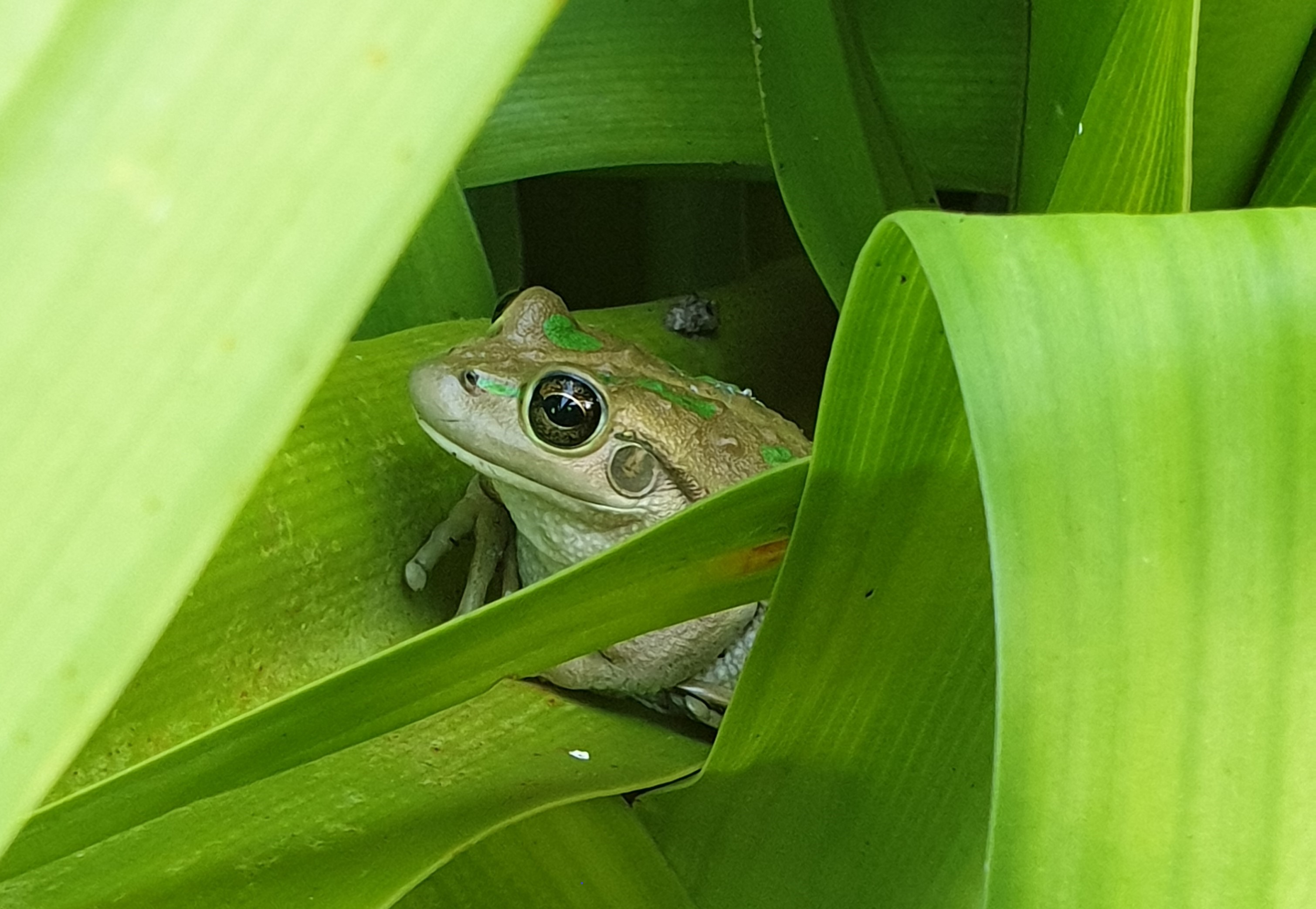
A motorbike frog Litoria moorei sheltering in a private garden (Fremantle). Credit: Kirsten Parris 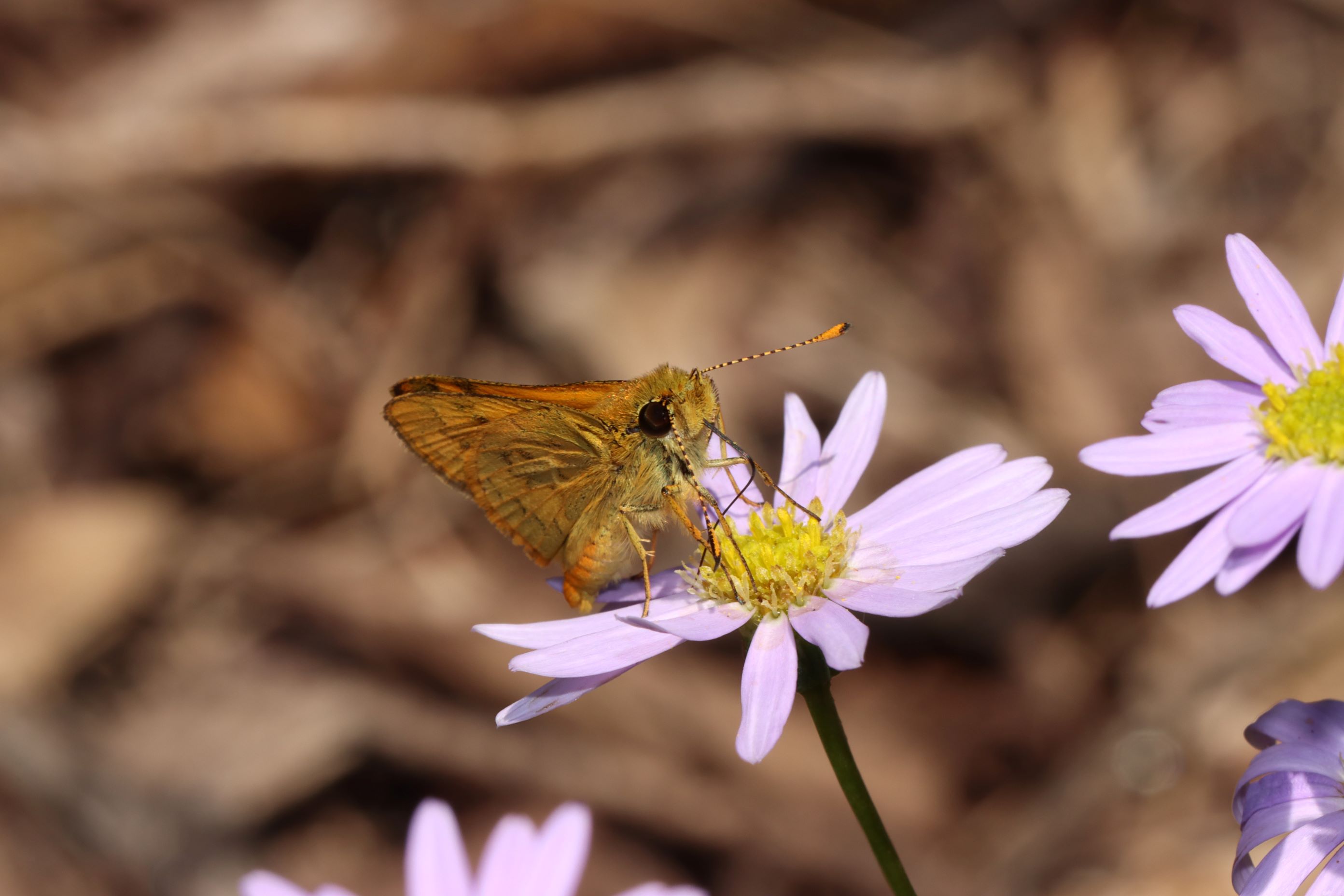
A green grass-dart Ocybadistes walkeri visiting a Brachyscome multifida flower. Credit: Philippa Bell 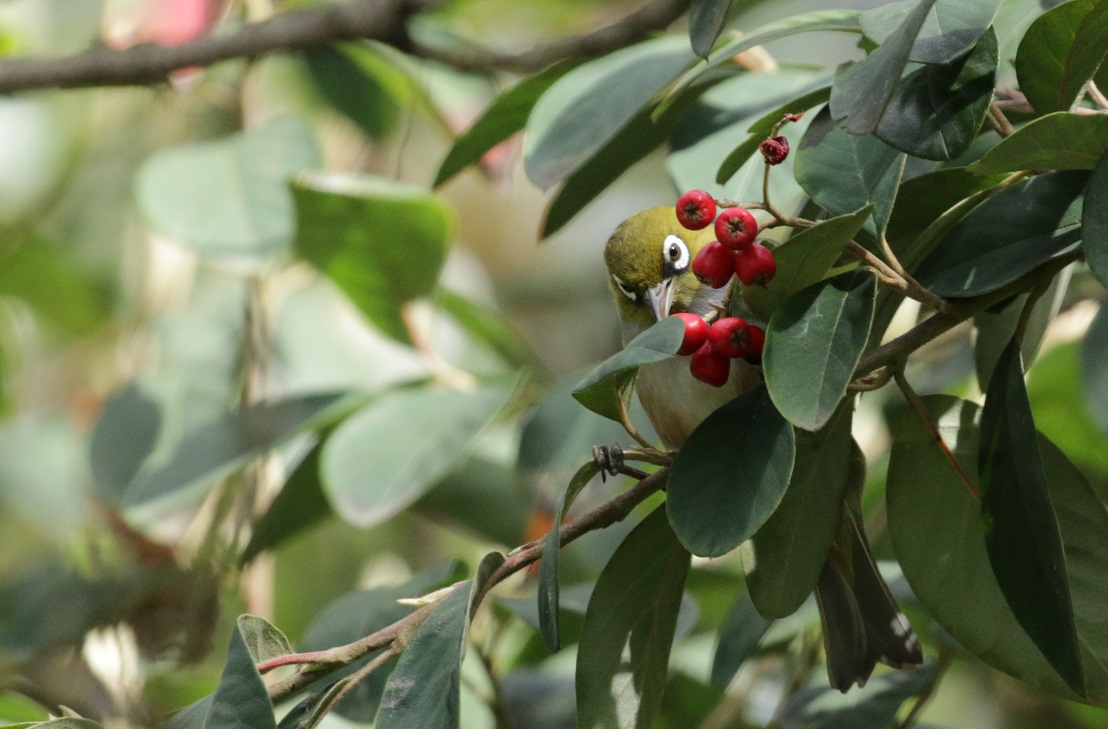
A silvereye Zosterops lateralis feeding on the berries of a Cotoneaster tree (Royal Park, Melbourne). Credit: Kirsten Parris 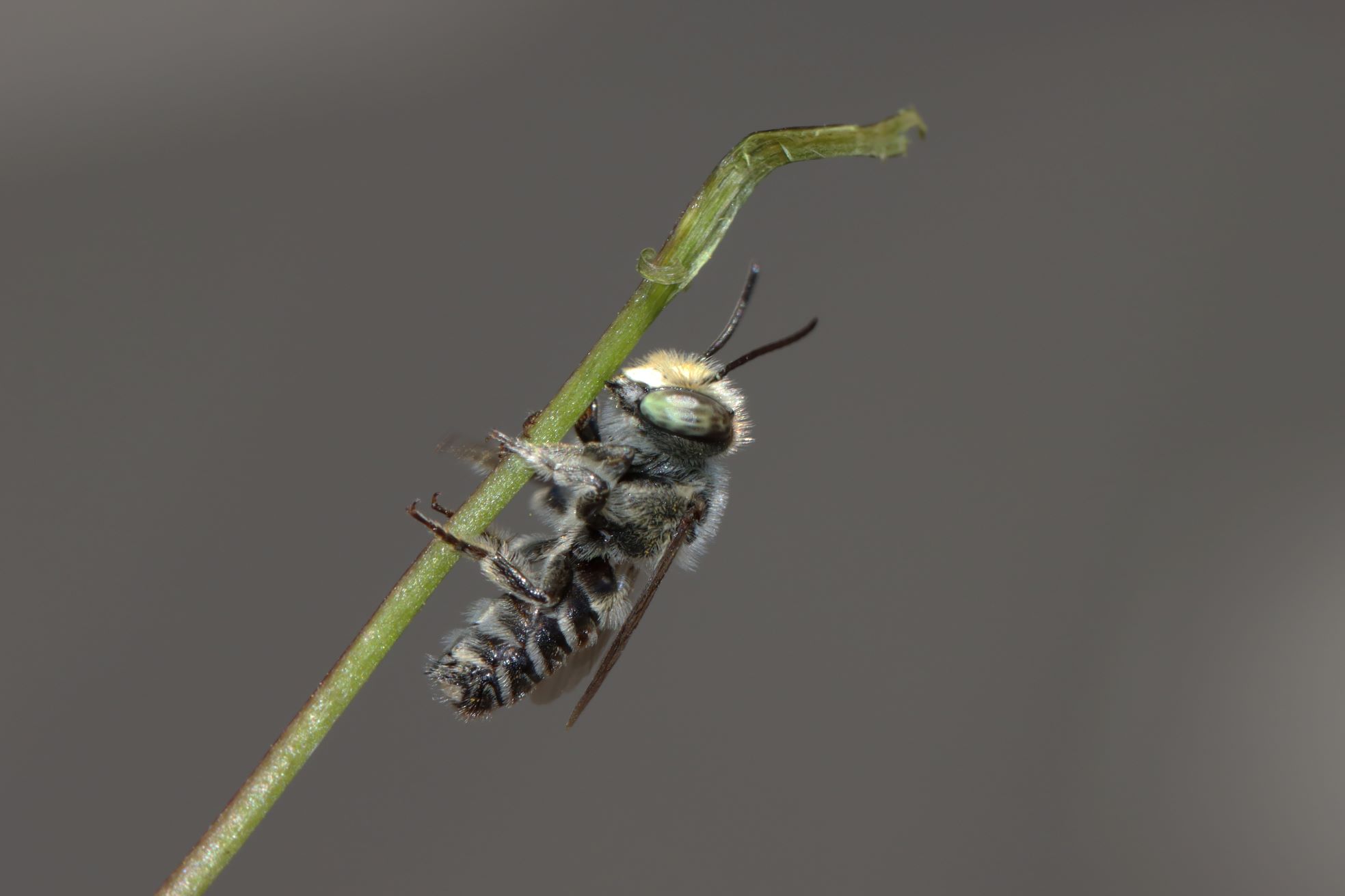
A leafcutter bee, Megachile sp. Credit: Philippa Bell 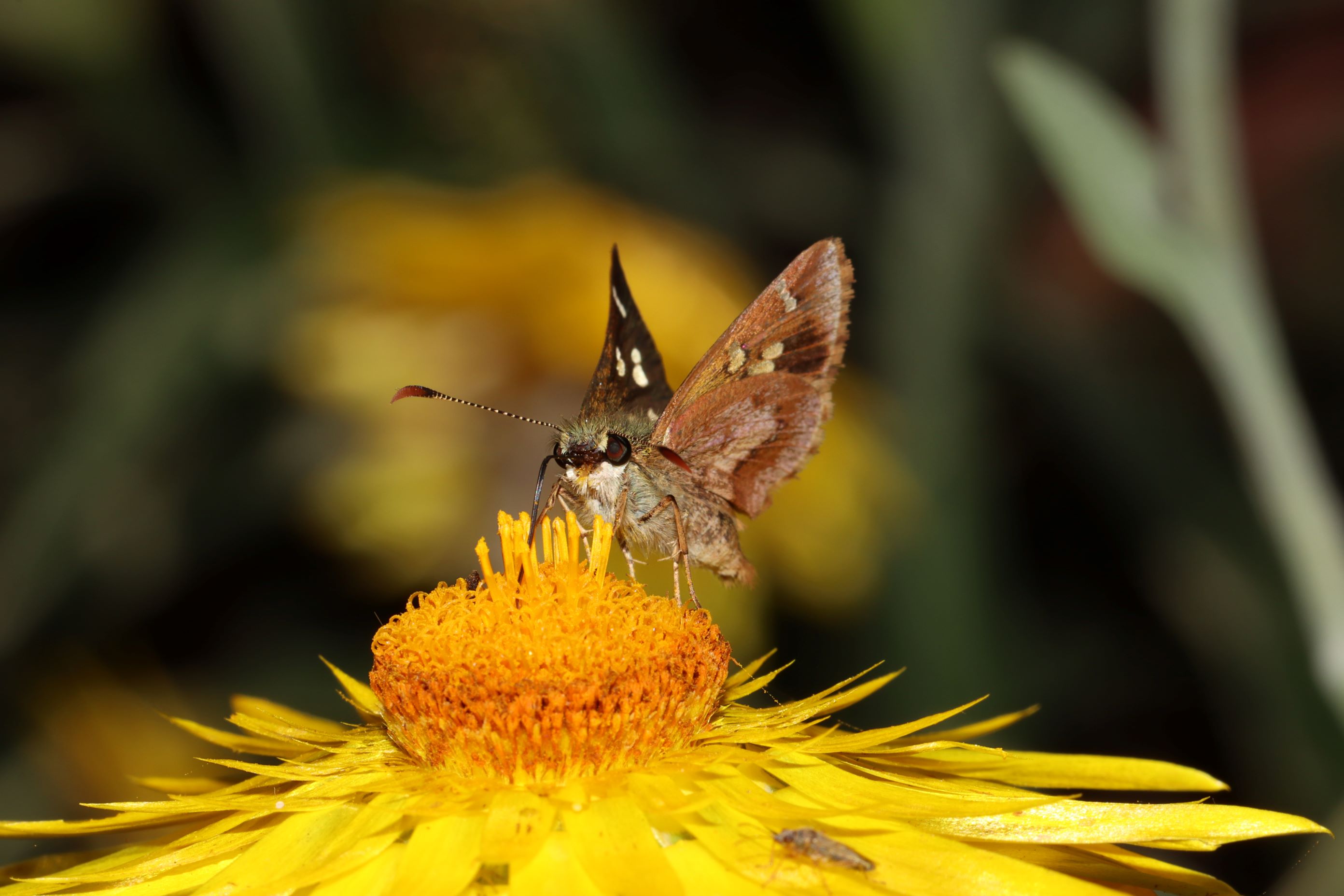
A barred skipper butterfly Dispar compacta visiting a Xerochrysum bracteatum flower. Credit: Philippa Bell
Who we are

Professor Kirsten Parris – Urban ecologist and Director of the Office for Environmental Programs at The University of Melbourne

Philippa Bell – PhD student
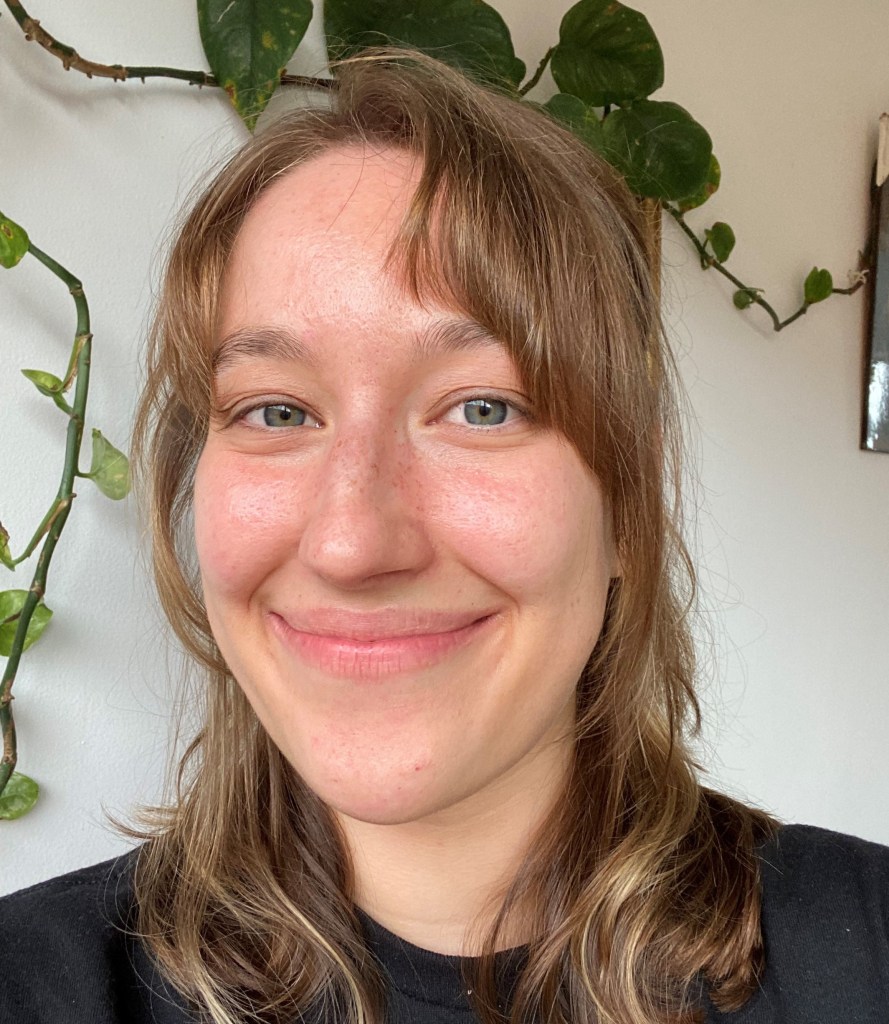
Angela Muscatello – PhD student
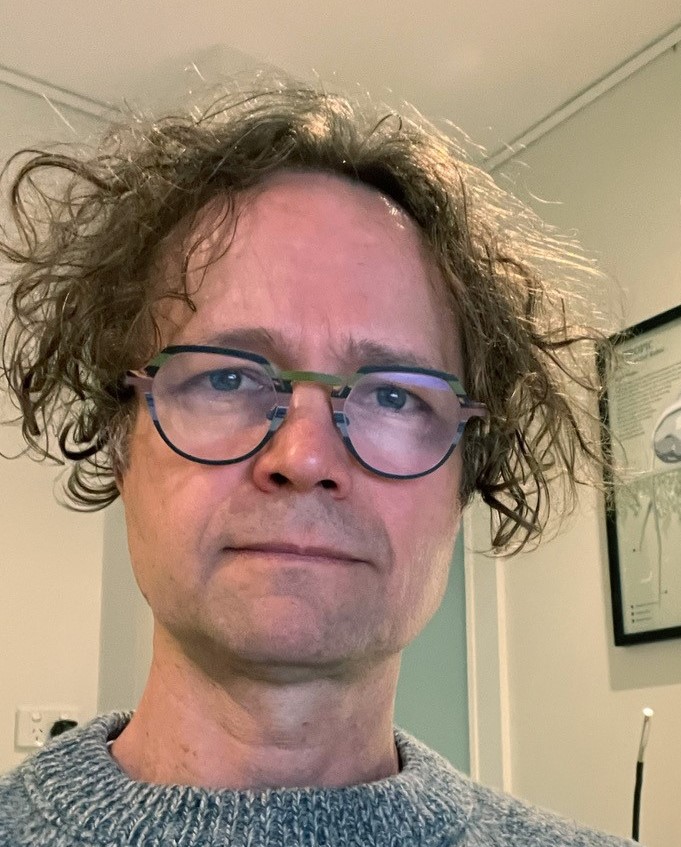
Steven Santer – PhD student (completed)

Clare Wilson – Honours student (completed)
Our projects
Impacts of noise, light and chemical pollution on freshwater communities in urban wetlands – Kirsten Parris & Therésa Jones
Growth-area planning to maintain functional biodiversity – Kirsten Parris, Georgia Garrard and Sarah Bekessy
Practical conservation actions to support the threatened growling grass frog – Kirsten Parris, Geoff Heard & collaborators
Building streetscape habitat to enrich insect biodiversity – Philippa Bell, with the City of Merri-Bek
Assessing ecological function in disturbed landscapes – Angela Muscatello
More-than-human design concepts to connect people and nature – Steven Santer
Effects of aircraft noise on the calling behaviour of the growling grass frog – Clare Wilson
Research themes
Urban ecology

How do organisms interact with each other and their environment in urban areas? Which ecological theories apply in the city? How do novel urban stressors shape ecological communities?
Urban planning to support biodiversity & ecosystem services
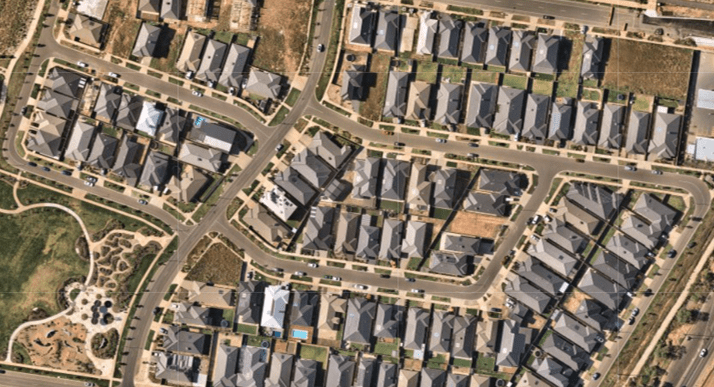
How can we integrate ecological understanding into urban-planning processes to design cities that support both people and nature?
Urban conservation

What practical strategies can we use to conserve threatened species and ecological communities in cities?
Ecology meets design
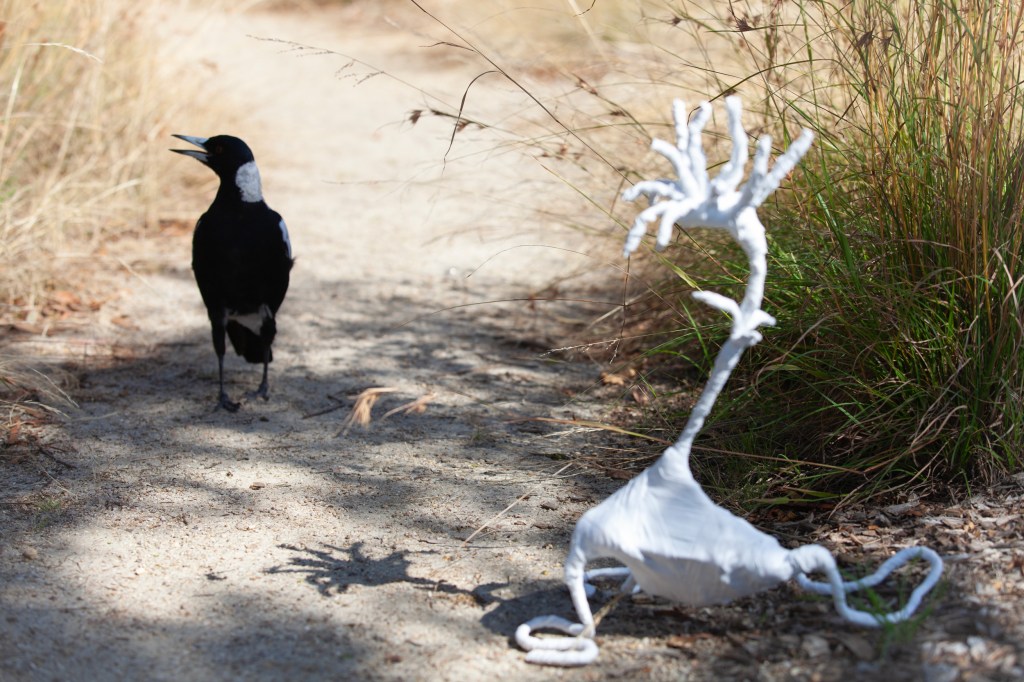
How are nonhuman lifeworlds accounted for in a more-than-human design practice? What are the boundaries of contexts, speculations, technological tools, and scientific knowledge that reveal nonhuman experience?
Urban soundscapes

Many animals use sound to communicate with each other or detect predators and prey – how are these processes affected by urban noise? How do animals respond?
Science communication

How can we better communicate the importance of nature in cities?
Our publications
Recent publications
Bell, PL, Garrard, GE and Parris, KM (2025) Investigating the value of citizen-led gardens on road verges for insect biodiversity in the City of Merri-bek, Australia. Urban Forestry & Urban Greening 108, 128821.
Parris KM (2023) Impacts of urbanization on amphibians, and opportunities for their conservation in cities. Pp. 275-288 in M Aronson & C Nilon (eds), The Routledge Handbook of Urban Biodiversity (Routledge, New York).
Parris KM, Heard GW and McKnight DT (2023) Declaration of frogs’ recovery ignores key data: A response to Woinarski et al. 2023. Biological Conservation 283, 110127.
Parris KM, Steven R, Vogel B, Lentini PE, Hartel J and Soanes K (2023) The value of question-first citizen science in urban ecology and conservation. Conservation Science and Practice, e12917.
For a full list see https://kirstenparris.com/publications/
Location
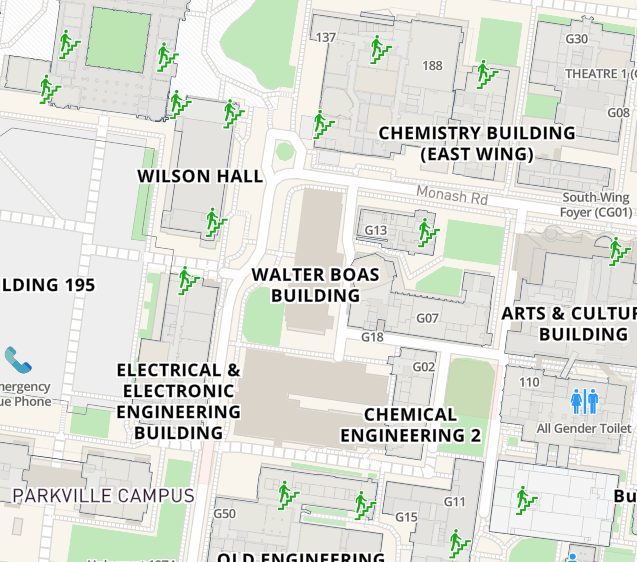
Level 1, Walter Boas Building (Building 163)
Corner of Monash Rd and Wilson Ave
 Urban Ecology and Conservation Research Group